"But that's not how we raised you" - Bridging the parenting gap with grandparents
Aug 28, 2026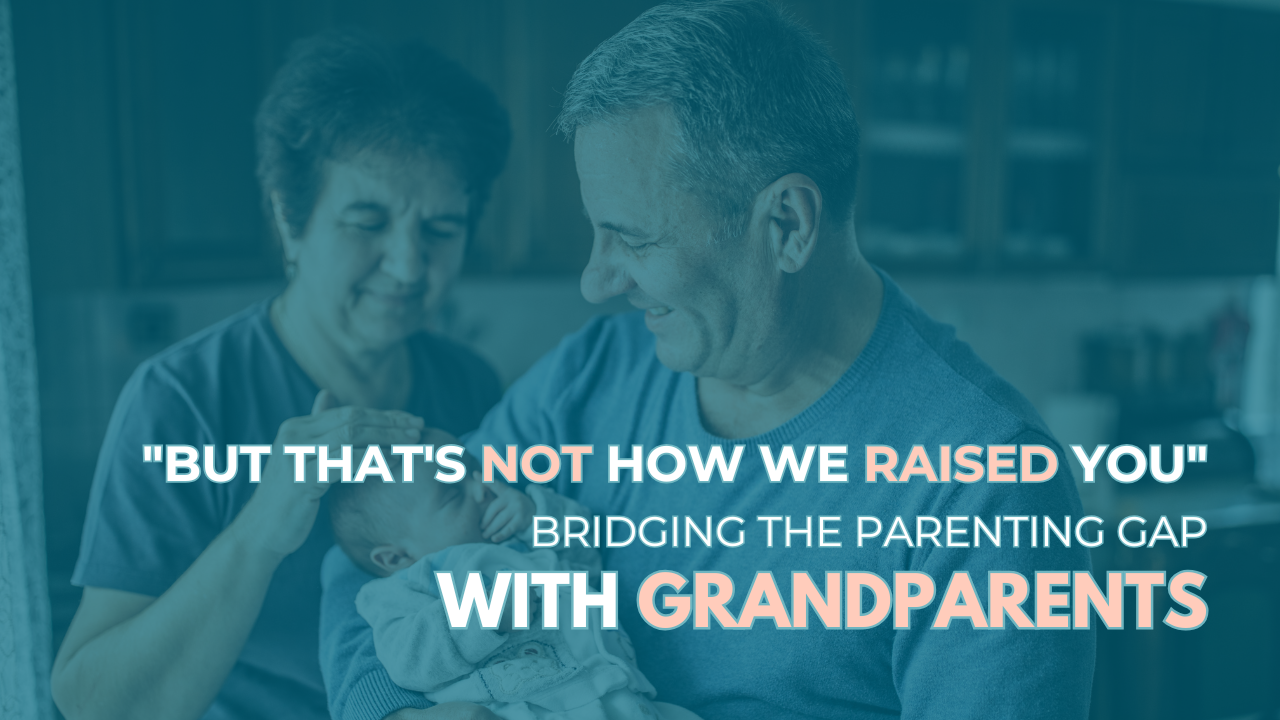
Picture this.
You're at a family barbecue. Your toddler doesn't want to hug Grandpa goodbye, and you say, gently, "That's okay, you don't have to." Grandpa laughs it off, but you catch the look. The one that says soft parents raising soft kids. Later, over dinner, someone mentions your daughter "talks back" and needs a firmer hand. You bite your tongue. Again.
If this sounds familiar, you're not alone, and you're not overreacting. Parenting has changed more in the last 30 years than in the 100 before it, and a lot of that change is happening in the space between "keep them safe" and "raise them polite." The trouble is, the people who love your kids the most, their grandparents, were often taught the opposite set of rules.
This one's for you to read, and then to pass on.
Why parenting looks so different now
Thirty years ago, most parenting advice sat on a single idea: children should be obedient. Seen and not heard. Respect your elders, no matter what. Do as you're told. Bodily autonomy wasn't a phrase anyone used, because the concept barely existed for kids. Consent was something adults negotiated with each other, not something you asked a four-year-old for before you tickled them or told them to hug Auntie goodbye.
That generation of parents wasn't doing it wrong. They were doing what they'd been taught, by their own parents, by the culture and by a society that hadn't yet connected the dots between "teach kids to always comply with adults" and "make kids easier to groom and harder to protect."
We know those difference now. That's the shift.
Today's parents are raising kids with a different set of tools, built on things we simply didn't understand or talk about a generation ago:
- A child who's allowed to say no to a hug is a child who believes their "no" has power, and predators specifically target kids who don't believe that.
- A child who's taught their body belongs to them is a child with the language to tell you when something feels wrong.
- A child who's allowed a voice at home is a child more likely to use that voice if someone tries to silence them elsewhere.
None of this is about raising disrespectful kids. It's about raising kids who know the difference between respect and compliance, because those two things protect kids very differently.
A note you can pass straight to the grandparents
(This part's for them. Feel free to send it exactly as is.)
If you're a grandparent reading this, first: thank you. Thank you for showing up, for loving these kids fiercely, for driving across town for school pickups and sitting through school concerts and slipping them lollies you know their parents will disapprove of. None of what follows is a criticism of how you raised your own kids. You did it with the best information you had, and by every measure that mattered at the time, it worked. Your kids grew up and are hopefully thriving.
But we've learned different things since then, particularly about how children are groomed and abused, that have changed what "keeping kids safe" actually looks like in practice.
Here's the short version. Offenders don't usually target the kid who feels comfortable saying no, questioning an adult, or telling someone when something feels wrong. They target the kid who's been taught that adults are always right, that their job is to comply, and that "because I said so" is a good enough reason for anything. That's not a criticism of the kids or the parents who raised them that way. It's simply what the research, and years of sitting across from offenders and survivors, has taught us.
So when your grandkids' parents ask you not to force a hug or a kiss goodbye, they're not being precious. They're teaching a five-year-old that their body belongs to them, in the exact same low-stakes moment where it's easiest and safest to learn it, so that if a much higher-stakes moment ever comes, the lesson is already there.
When we know better, we do better. This is parents doing better, with love for you built right into it. They want you close to these kids. They just need your help teaching a different lesson than the one you were taught.
We know you love these kids, we know you would never want anything to happen to them and we hope you can help us keep them safe from harm.
Scripts: what to actually say
Knowing why is one thing. Having the words ready in the moment, especially at a family gathering with everyone watching, is another. Here are some starting points.
When a grandparent pushes for a forced hug or kiss:
"We're letting her choose how she says goodbye, a hug, a wave, a high five. It's not about you, it's about her getting practice trusting her own 'no' while it's still low stakes. Would you go with a high five instead?"
When you hear "back in my day, kids just did as they were told":
"They did, and I get why that felt like it worked. But I've learned that kids who are taught to always obey adults are actually more vulnerable to abuse, because they never get practice questioning one. I'm not raising a disrespectful kid, I'm raising one who knows the difference between respecting someone and doing whatever they say."
When a grandparent undermines it directly to the child ("don't be silly, just give Nanna a cuddle"):
Keep it calm, keep it brief, and back your kid in the moment, then follow up privately. In the moment: "It's okay, mate, you get to choose." Afterwards, one-on-one: "I know it probably felt like a small thing, but it matters that we're consistent with him on this. Can I explain what we're trying to teach him and why?"
When you want to open the bigger conversation, not just react to one moment:
"I've been reading a bit about how parenting's changed and honestly, some of it surprised me too. Can I share it with you? I'm not trying to tell you that you did anything wrong, I actually just want you in on why we're doing some things differently, because I want you close to the kids and on the same page as us."
A line for the kids themselves, said in front of grandparents (it teaches everyone at once):
"You always get to decide who touches your body and how, even with people, both adults and other kids, we love or like."
This isn't a battle, it's a bridge
None of this is about winning an argument or proving the older generation "got it wrong." Most grandparents love these kids desperately and would do anything to keep them safe, they just haven't always had access to what we now know. Give them the same thing you're giving your kids: the why, not just the rule. People rarely change behaviour they don't understand the reason for. But most people, once they genuinely understand that this is about protection and not politeness, will meet you there.
What to do if they don’t agree or keep doing it anyway…
If you speak with your family and they don’t agree or they keep doing the things you asked them to change, that’s information that we should take seriously.
It says to you that they may not be the safe adults you were hoping them to be. That they might not tell you if something happens or they may not react the way you are hoping they will.
It doesn’t necessarily mean they are predatory or abusive, BUT they are showing that your values don’t align. In these situations, I would suggest that you discuss with your partner or co-parent, whether they still get unsupervised access or one-on-one time with your child. Especially if they are younger and unable to speak up about inappropriate or unsafe behaviours.
Share this with the grandparents in your life. Not as a lecture, as an invitation to be part of raising a generation of kids who know their voice matters and their body is their own.

